Pringlebay ReWilding

Breeding Birds on Our Beaches

ThalleonAdmin
05/04/2024
The African Black Oystercatcher (Swarttobie) and the White-fronted Plover (Vaalstrandkiewiet) are the only two breeding birds that occur along the Overstrand coastline. The oystercatcher is a large black bird with a bright orange bill while the plover is small and well camouflaged. The future of both these species is under threat, according to the Chairman of BLO (Anton Odendaal), because they are very vulnerable when nesting on the ground. These birds are sensitive to disturbances which happens over the summer, mostly by beachgoers and dogs enjoying the beach, but who often approach too close to the nests and or the young chicks once hatched.

Birdlife Overberg has campaigned to educate beach goers on how to share the shores in collaboration with Nature Valley’s Trust and the Overstrand Municipality for several years. Pringle Bay has always tried to create an awareness on the main beach of the breeding African Black Oystercatchers and more recently the White-fronted Plovers. Chris Geldenhuys (PBRPA) was instrumental in putting nests signs up and keeping an eye on the success of the breeding pairs on the beach. This summer we would appreciate if one could spread the word and gently remind folk how their actions are affecting these birds.
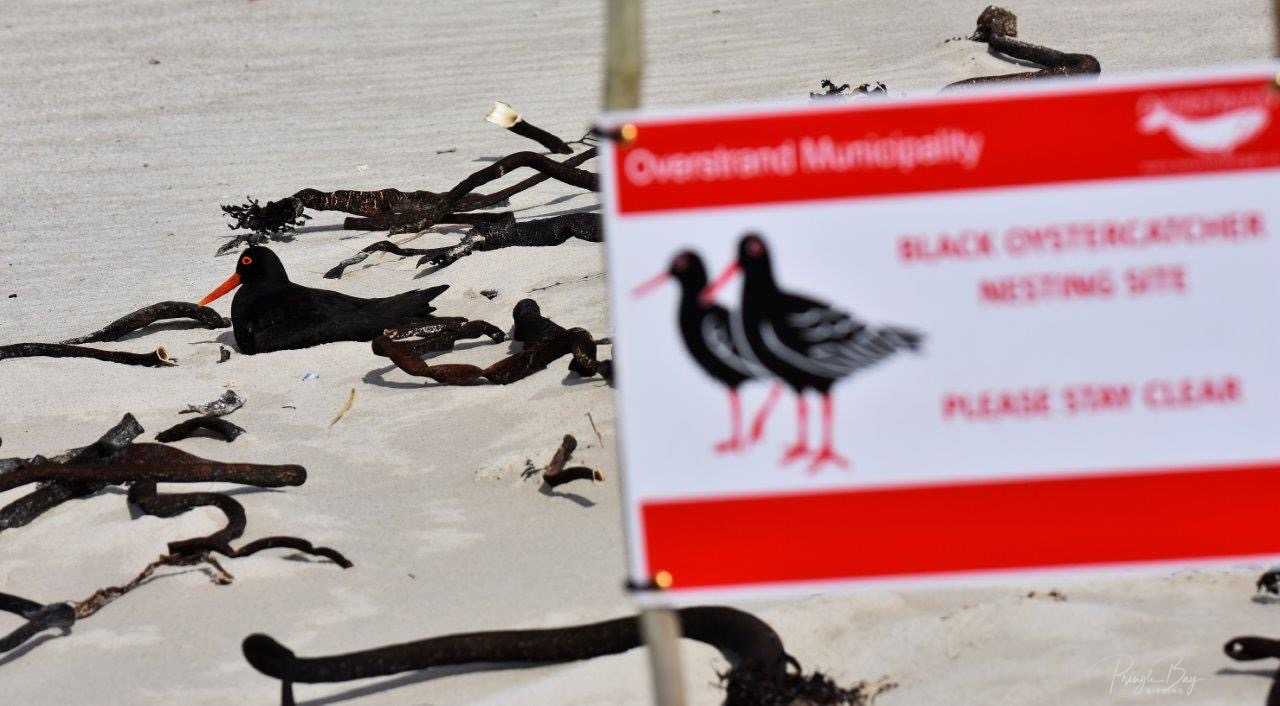
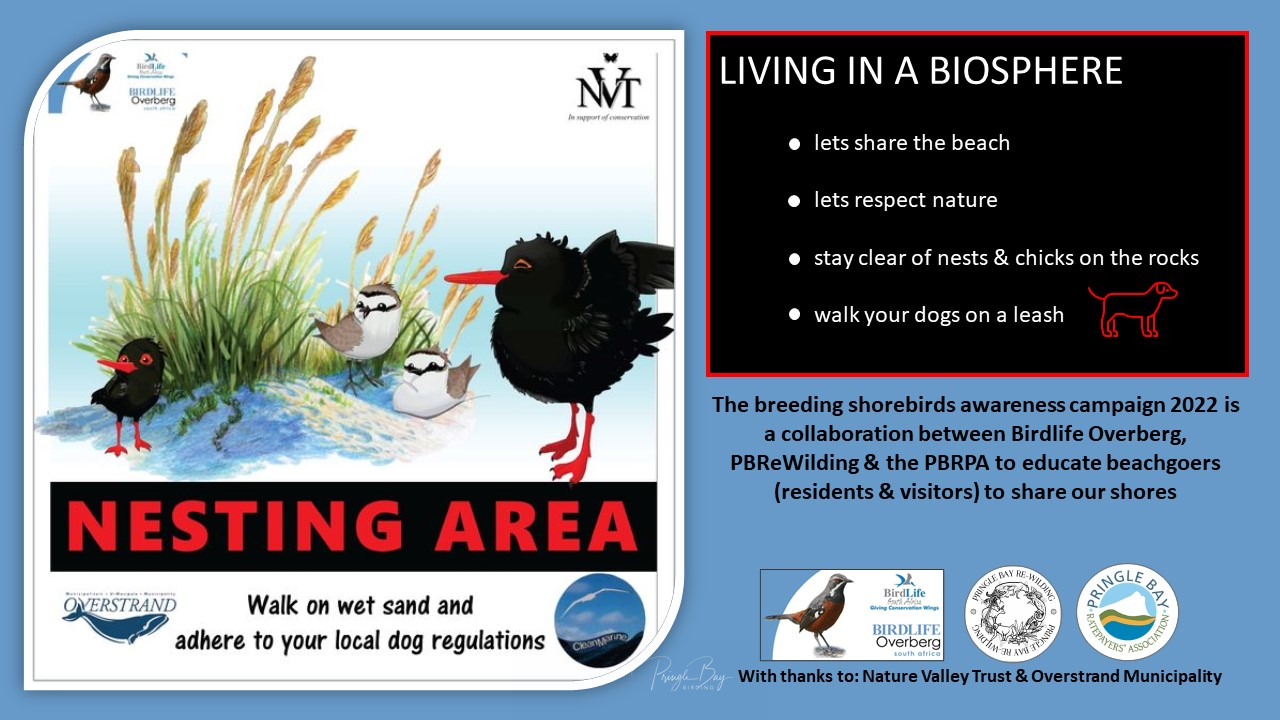
Nest warning signs identifying nesting sites will be put up at the beach, please do not approach within at least 30m. This is tricky at high tide, especially on the southern end near the wooden board walk entrance, often the high tide mark is near the base of the dunes. Researchers at the Nature Valley’s Trust found that the birds leave their nests if approached within 30m. These birds are very sensitive to ‘threats’ entering their breeding territory and become defensive and often stand up and leave their eggs by walking or flying away. This defensive behaviour often attracts nearby predators (Kelp Gulls and Rock Kestrels etc) to the nests and the young chicks. The time that they spend off the nest can also cause the eggs to fail (they literally cook in the sun) or the chicks to die due to heat exposure.

The breeding success of these two species is declining especially where beaches are busy. Hence, they are good indicators of a healthy coastal ecosystem. The success of each nest may therefore be critical for the survival of the species according to Anton who recommends that we share the shores responsibly by giving these nesting birds some space and by avoiding the designated nesting areas.  Dogs should be leashed on the beaches for the breeding season, please note that ‘well-trained dogs’ are perceived as a threat as the birds see all animals as potential predators. Last year only one oystercatcher chick fledged the others were all killed by dogs. Living in a biosphere lets share the shores…

Leave a Reply

Your email address will not be published. Required fields are marked *