Living in a Biosphere with Birds
ThalleonAdmin
05/04/2024
Oxford Dictionary defines a bird as “a warm-blooded egg-laying vertebrate animal distinguished by the possession of feathers, wings, a beak, and typically by being able to fly.” However, some birds like ostriches and penguins cannot fly, even though they still have wings.
Birds are found worldwide with around 10 000 species recorded of which 50% are passerine (perching) birds. In Southern Africa, there are some 990 species listed while the Western Cape boasts a list of 619 species and the Overberg 338 while some 174 birds have been recorded in or close to Pringle Bay (please click on the links to download the lists).
Pringle Bay is often overlooked as a birding destination as we are sandwiched between Rooiels and Betty’s Bay which are popular stops for birding. The former is well known for sightings of the Cape Rockjumper (Near Threatened) which is endemic to the Cape Mountain fynbos and the latter by the Stony Point Nature Reserve where the African Penguin (Endangered) colony is. Pringle Bay together with these two villages form part of the small but critical southern coastal transition zone of the Kogelberg Biosphere which boasts of an amazing diversity of plants and habitats making it a favourite destination for ornithologists and naturalists alike. Please share your photographs and add to our gallery.
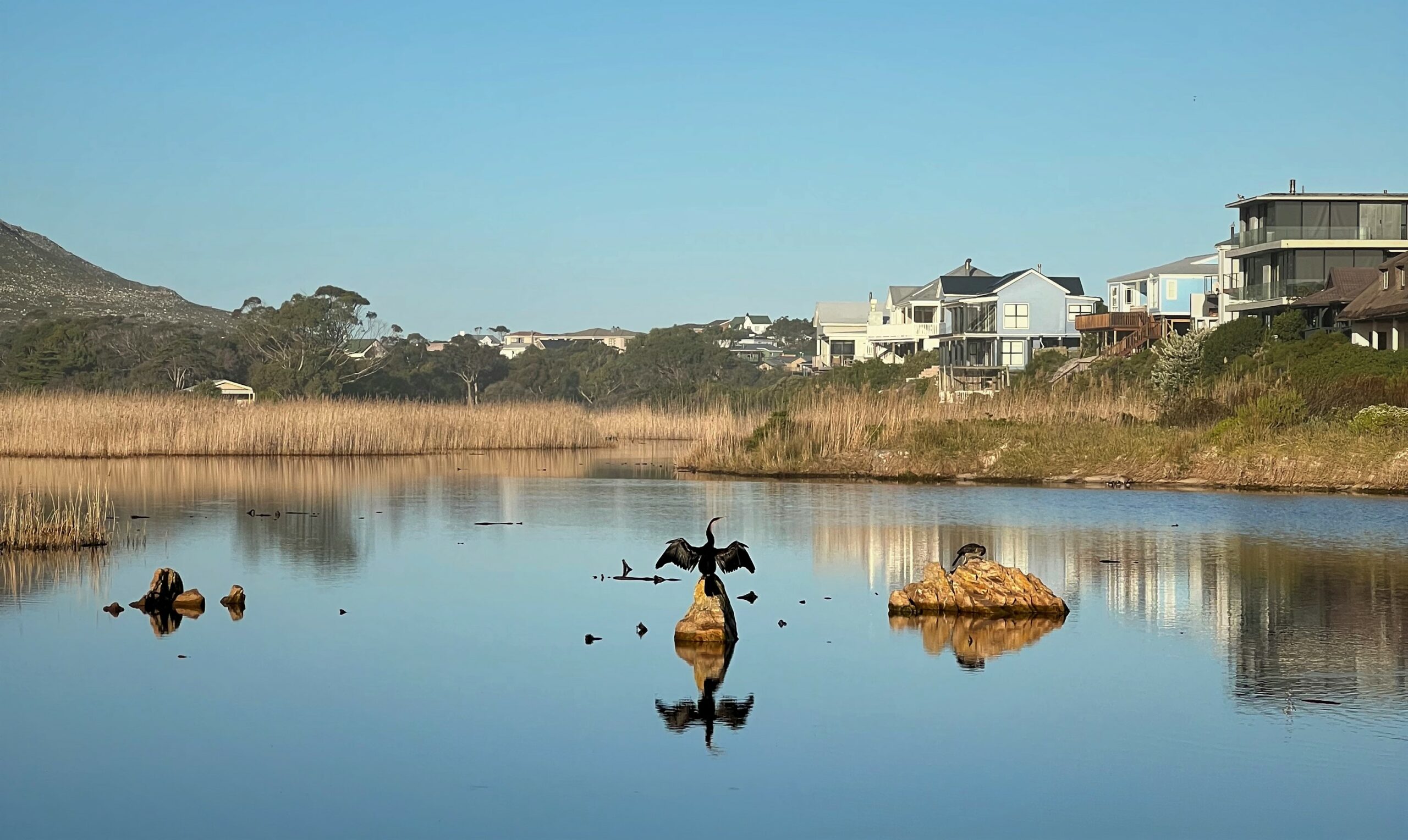
Pringle Bay offers a small river/lagoon area where the Buffels River seasonally enters the sea, breeding shore birds, near shore and even some visiting pelagic birds can be seen from off the Point promontory. The river/lagoon area is where the Giant & Malachite Kingfishers, Grey Heron, Little Egret, Bank Cormorant and occasionally Yellow-billed Ducks are spotted.
The main beach has breeding pairs of Black Oystercatchers and White-fronted Plovers. Other birds seen include – Kelp, Hartlaub’s and occasionally Grey-headed Gulls; Cape Cormorants, Grey Herons and Little Egrets on the rocks. Walking along the coastal path from the beach to the Point area you will see different Terns, the most common is the Swift while the Sandwich and Common are summer migrants. Egyptian Geese, Hadadas and Sacred Ibis plus possible sightings of Three-banded Plovers may occur.
Walking around the village, especially along Highlevel Road, you will see Cape Sugarbirds, Malachite, Southern Double-collared and Orange-breasted Sunbirds, Cape Wagtails, Cape Rock Thrush, Bulbuls, Wagtails, Canaries, Grassbirds and White-eyes plus the skulking Cape Robin-chat. Other common birds will include Karoo Prinias, Southern Boubou, Speckled Mousebirds, Red-winged Starlings, Streaky-headed Seedeaters, Familiar Chats and Speckled Pigeons. The common doves are the Laughing, Red-eye and Ring-necked (Cape Turtle).
Seen in the sky above the village one often spots the White-necked Ravens, Rock Kestrels, Peregrine Falcons, Jackal Buzzards and less frequently these days the Verreaux’s (Black) Eagles. Summer migrants include Barn, Greater-striped and White-throated Swallows. On the ground we see Helmeted Guineafowls, Cape Spurfowls and Spotted Thick-knees – all of which breed successfully in the urban area. In the wetland areas and near both the Buffels River and Hangklipkloof stream Cape Weavers and Yellow Bishops are active. On Hangklip mountain the elusive Cape Rockjumper is heard and when the grasses are seeding the Cape Siskin and Neddickys (infrequently).
The main beach has breeding pairs of Black Oystercatchers and White-fronted Plovers. Other birds seen include – Kelp, Hartlaub’s and occasionally Grey-headed Gulls; Cape Cormorants, Grey Herons and Little Egrets on the rocks. Walking along the coastal path from the beach to the Point area you will see different Terns, the most common is the Swift while the Sandwich and Common are summer migrants. Egyptian Geese, Hadadas and Sacred Ibis plus possible sightings of Three-banded Plovers may occur.
Walking around the village, especially along Highlevel Road, you will see Cape Sugarbirds, Malachite, Southern Double-collared and Orange-breasted Sunbirds, Cape Wagtails, Cape Rock Thrush, Bulbuls, Wagtails, Canaries, Grassbirds and White-eyes plus the skulking Cape Robin-chat. Other common birds will include Karoo Prinias, Southern Boubou, Speckled Mousebirds, Red-winged Starlings, Streaky-headed Seedeaters, Familiar Chats and Speckled Pigeons. The common doves are the Laughing, Red-eye and Ring-necked (Cape Turtle).
Seen in the sky above the village one often spots the White-necked Ravens, Rock Kestrels, Peregrine Falcons, Jackal Buzzards and less frequently these days the Verreaux’s (Black) Eagles. Summer migrants include Barn, Greater-striped and White-throated Swallows. On the ground we see Helmeted Guineafowls, Cape Spurfowls and Spotted Thick-knees – all of which breed successfully in the urban area. In the wetland areas and near both the Buffels River and Hangklipkloof stream Cape Weavers and Yellow Bishops are active. On Hangklip mountain the elusive Cape Rockjumper is heard and when the grasses are seeding the Cape Siskin and Neddickys (infrequently).
