Harbinger of Autumn
ThalleonAdmin
Autumn Widow Butterfly (Dira clytus) – False Bay Echo
05/04/2024
Well, if you didn’t already suspect, it’s late autumn in the Cape. You will have been alerted to this fact by the large numbers of brown/black butterflies flitting around, especially near the coast.
At first, I resisted the thought of writing about them; I was sure everyone with any interest in the natural world would know what they are. But maybe I could add some detail?
The butterfly is known as the Cape Autumn Widow (Dira clytus). From a distance they look blackish – hence the “widow’ clad in black. On closer view, they are not black but a velvety brown with lovely markings and prominent eyespots. The eyespots are thought to deter predators that are fooled into thinking that they should not attempt to eat prey with such large eyes. The undersides of the wings are cryptically coloured.
Interestingly, the Autumn Widow is related to the Table Mountain Beauty butterfly. These are known as ‘browns’ and belong to the family Nymphalidae and subfamily Satyrinae.
You may have noticed that the butterflies don’t often sit on flowers. Instead, the female butterflies fly slowly just above the grass, often settling on bare patches of ground. The reason is that the larvae of this butterfly feed on grasses and sedges. What you are seeing is the females scattering their eggs over clumps of grasses while in flight.
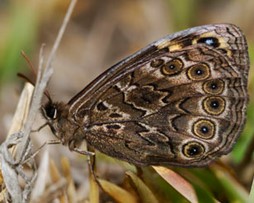
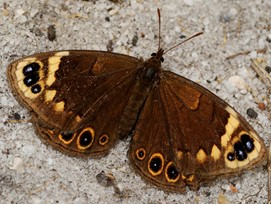
Dira clytus female (upper side on left) and underside on right) Photos by Steve Woodhall
The brown larvae (caterpillars) are well camouflaged and feed on various grasses particularly kikuyu (Pennisetum clandestinum, now renamed Cenchrus clandestinus). The grass diet of the larvae means that the butterflies are not poisonous, so theoretically they cannot afford to be highly visible and have to rely on camouflage to escape detection. For this reason, the dull brown larvae feed at night, and hide during the day. They take all year to mature, and then form a round brown chrysalis deep inside a grass clump. The butterflies tend to hatch out all at the same time between March and April, thus giving us the delight of large numbers of pretty butterflies all out and about their (procreating) business in sync. They tend to fly in the early, cooler part of the day, later sheltering under a grass clump.
Unfortunately, the larvae do not eat enough kikuyu to count as biological control of this pesky invasive grass.
Kikuyu has been introduced across Africa, Asia, Australia, the Americas, and the Pacific, The ease of cultivation, and the thick matting habit, have made this species desirable for use as a lawn – but with dire consequences for indigenous vegetation. It has high invasive potential due to its elongate rhizomes and stolons, with which it penetrates the ground, rapidly forming dense mats, and suppressing other plant species. It grows from a thick network of rhizomatous roots and sends out stolons which extend along the ground.
It can climb over other plant life, shading it out and producing herbicidal toxins that kill competing plants. It prevents new sprouts of other species from growing, may kill small trees and can choke ponds and waterways. It is resistant to mowing and grazing due to its strong network of roots, which easily send up new shoots.
In fynbos habitats, and especially coastal scrub along the Cliff Path, this invasive alien is rapidly wreaking havoc.
Our thanks to Dr Anina Lee and Whale Coast Conversation in sharing this article. As a side note Anina suggested the following: Recommended grasses are buffalo and kweek. Buffalo makes the best lawn in the Overstrand, it doesn’t need a lot of water but it does need fertilising in our very poor soil. One just needs to keep a watch on kikuyu invading it as the two are quite similar.
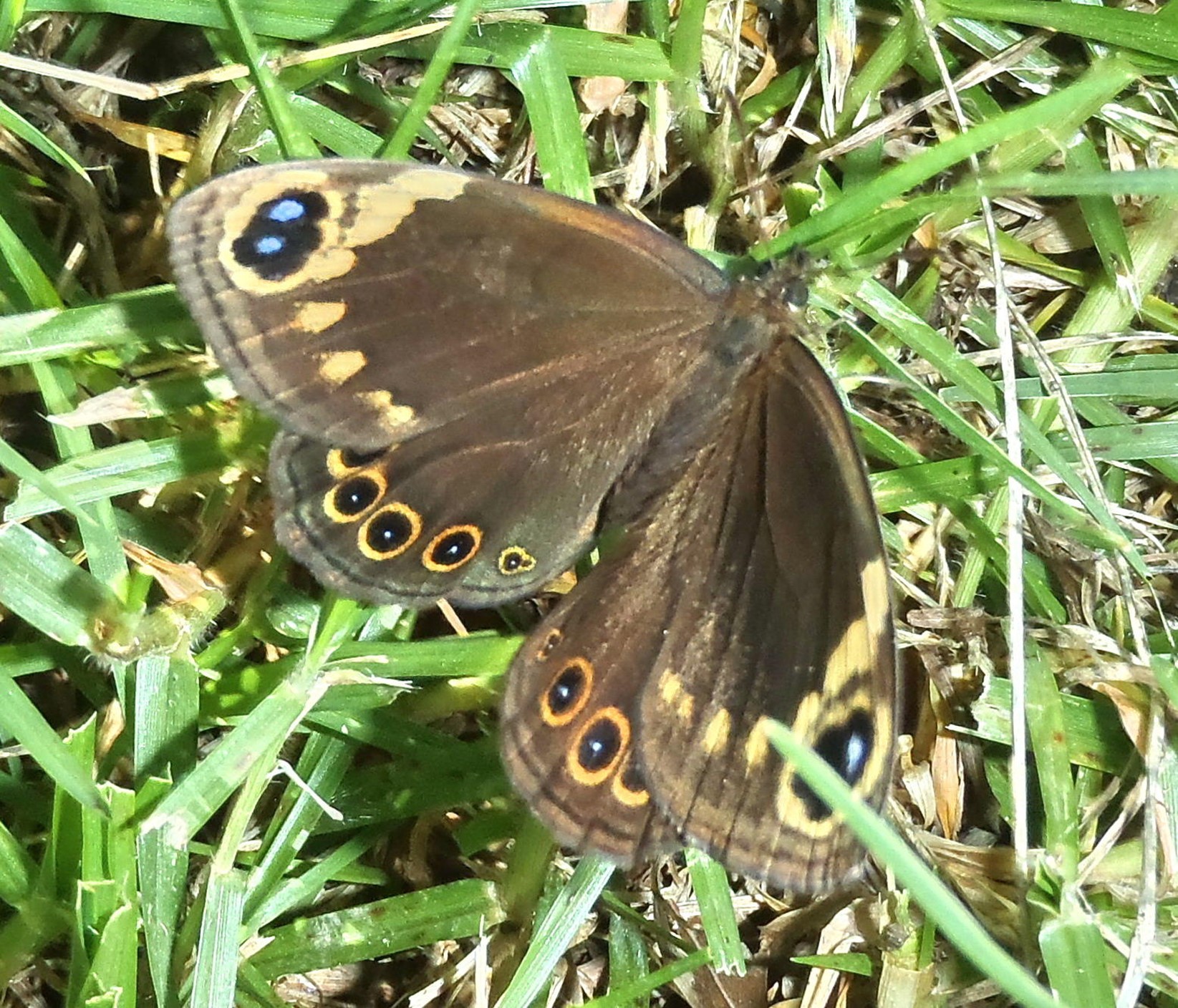
Cape Autumn Widow on kikuyu grass. Photo: iSpot

ThalleonAdmin