Discovering Wild Orchids in the Fynbos
05/04/2024
by ThalleonAdmin
One of the delights of living in Pringle Bay and being part of the Kogelberg Biosphere is my daily walks with my dogs in the fynbos. My fascination for flowering plants and the symbiotic relationships with endemic fynbos birds was my gateway into what I know refer to as my “botanizing” walks! Disperis capensis was my very first discovery in the fynbos of a wild orchid and so my love affair began with the local Western Cape endemic orchid species. I am no expert in this field, but my enthusiasm and natural inquisitiveness has resulted in my walks becoming a daily treasure hunt! Meeting fellow enthusiasts who have been willing to share their knowledge has been inspirational.
Some background to the Disperis genus – which has 78 species (mostly confined to Africa), 26 occur in South Africa and 6 are endemic to the Cape Floral Kingdom (Johnson & Bytebier, 2015). The fynbos in simple terms is the sum of 4 different parts – the proteoids, ericoids, restioids and the geophytes (Esler et al, 2014). Fynbos which is mostly found in the winter-rainfall region of the Western Cape and is a fire-driven ecosystem in which orchids, being geophytes, are able to survive. Some species have adapted so that they only flower in the first-year post fire (they can then go dormant for 20 – 30 years). Interestingly Disperis capensis did not show last year after the January 2019 fires, but are flowering en masse this year in the post burn areas. However, normally I find then in established and thick fynbos. The biggest threat to orchid species in the fynbos is habitat loss mostly due to urban spread, agriculture and invasive alien vegetation.
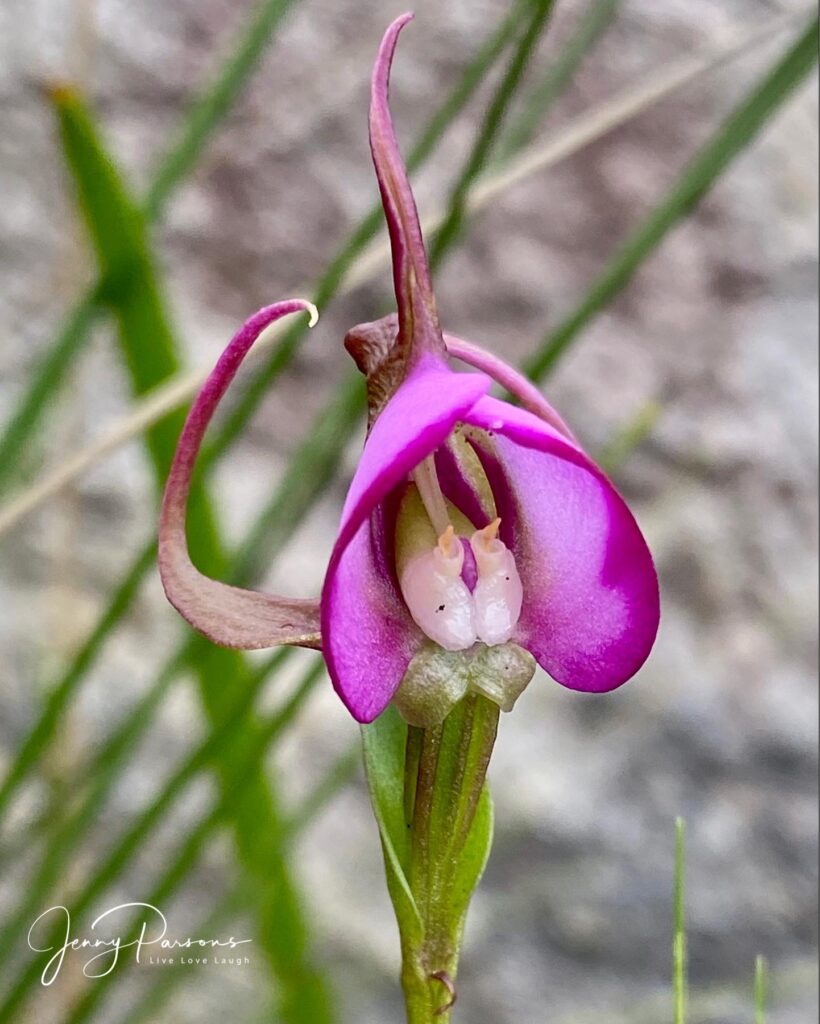
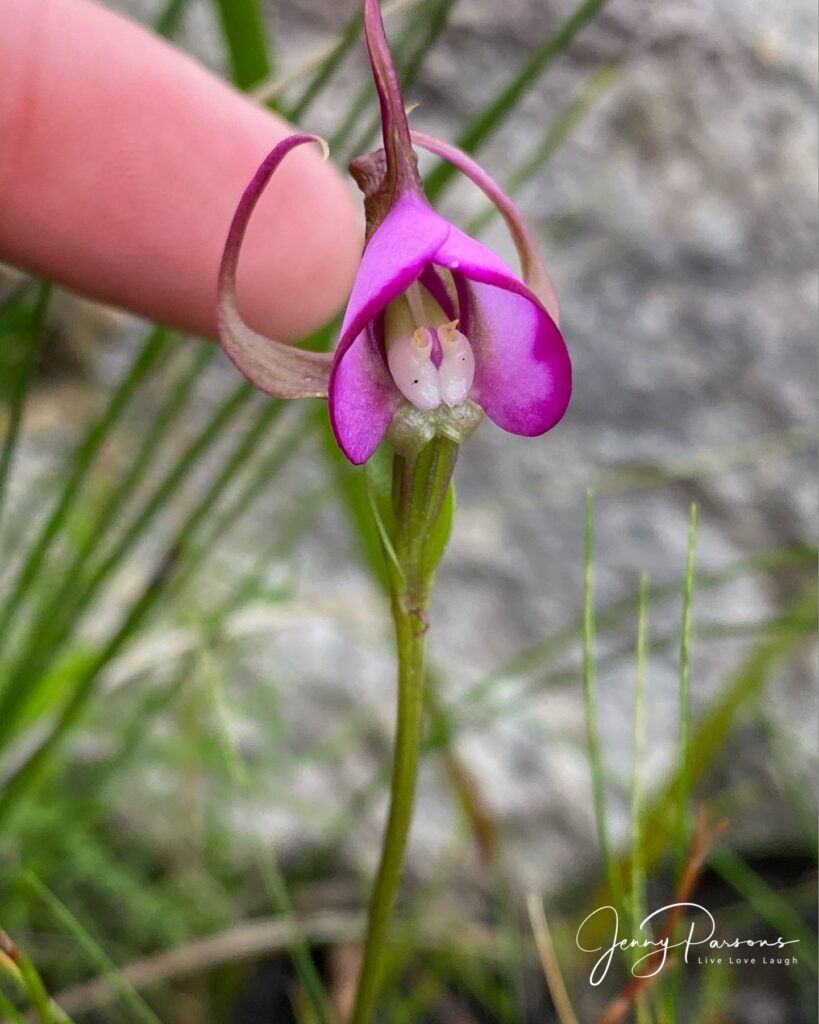
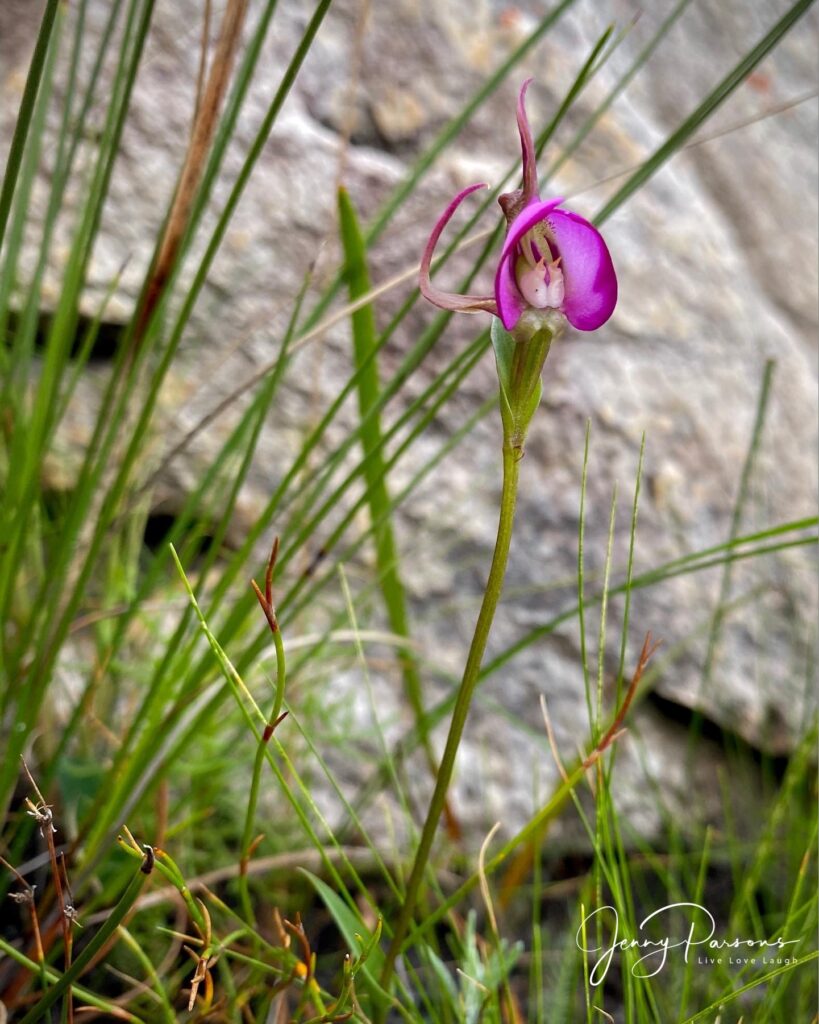
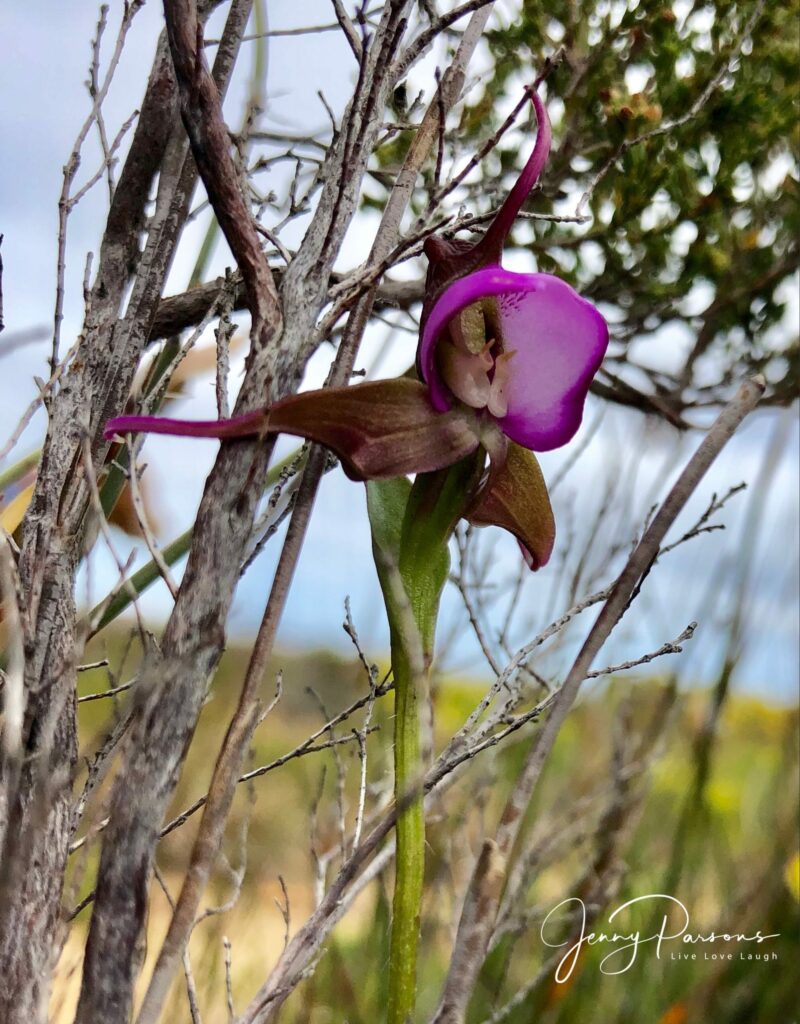
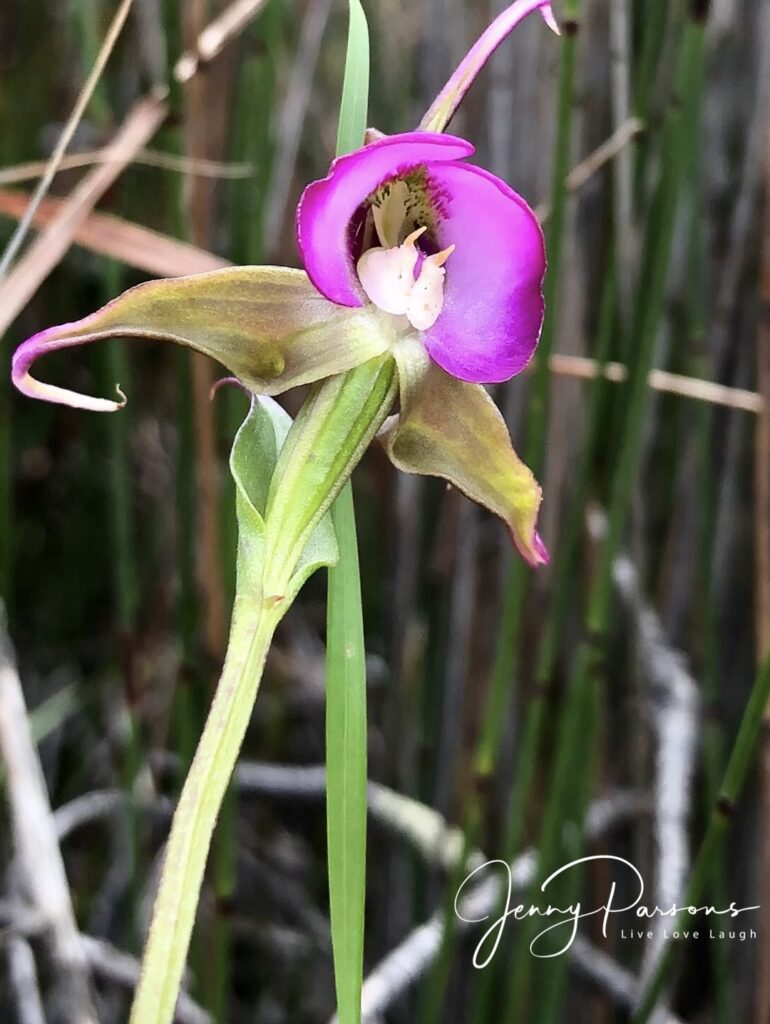
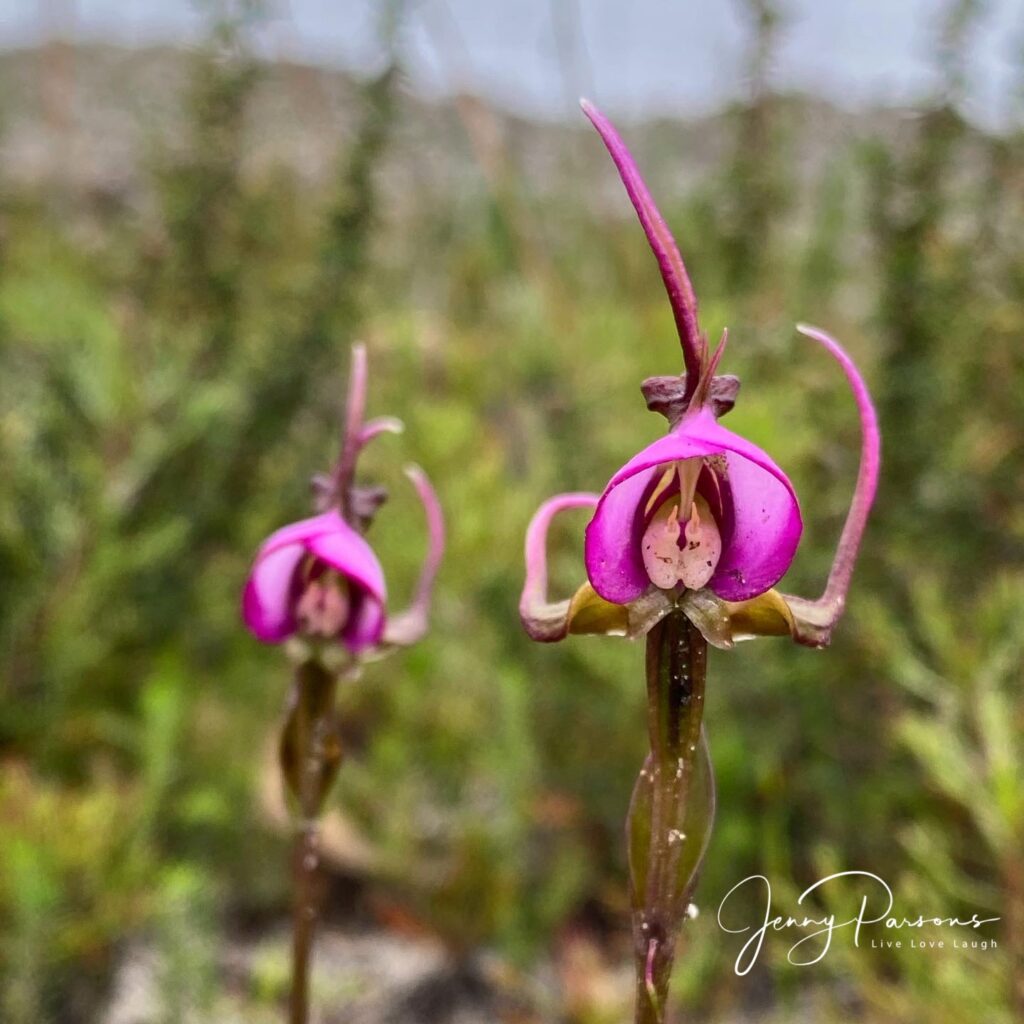
Disperis capensis is common and starts flowering after the first good winter rains from July to September. Common names are Granny’s Bonnet (Moederkappie) or the Cape Witch Orchid. Described as a small erect terrestrial orchid (Clarke et al, 2013) with a single distinctive flowerhead. Phillipskop Mountain Reserve (2020) refers to “a very distinctive orchid with a large purple hood with two long spurs that stick out at the side and strongly curve backwards, these two spurs are highly modified side sepals”. Two lanced-shaped basal leaves (Manning, 2007) and there are also a few leaves that sheathe the stem. Colour variations do occur but most of my observations have been the typical magenta-green combination with only a few with a whiteish hood. Typically found near Pringle Bay, in damp areas, on the lower slopes of the Hangklip and in the Kogelberg sandstone fynbos.
An interesting fact on Disperis capensis is that the flowers contain no nectar. Deceptive pollination occurs where it mimics Polygala and Muraltia species to trick carpenter bees (Xylocopa rufitarsis) into visiting and pollinating (Marais et al, 2017). Nature always amazes in how it evolves for a species to survive. Whale Coast Conservation hosted Jenny Cullinan (Ujubee) on the 11 May 2020, she discusses her observations of deceptive pollination in Disperis capensis.
The more you look the more you see, happy walking…

ThalleonAdmin
References
1. Esler, K., Pierce, M and de Villiers C. (eds) 2014. Fynbos Ecology and management. Pretoria: Briza Publications.
2. Johnson, S and Byterbier, B. 2015. Orchids of South Africa: A Field Guide. Cape Town: Struik Nature.
3. Manning, J. 2007. Field guide to Fynbos. Cape Town: Struik Nature.
4. Marias, D. (ed), 2017. Fernkloof Nature Reserve, Hermanus. Hermanus Botanical Society.
5. Phillipskop Nature Reserve, 2020 – Deceptive Grannies
6. Whale Coast Conservation, 2020 – Love of Bees – Jenny Cullinan (WCCHermanus)