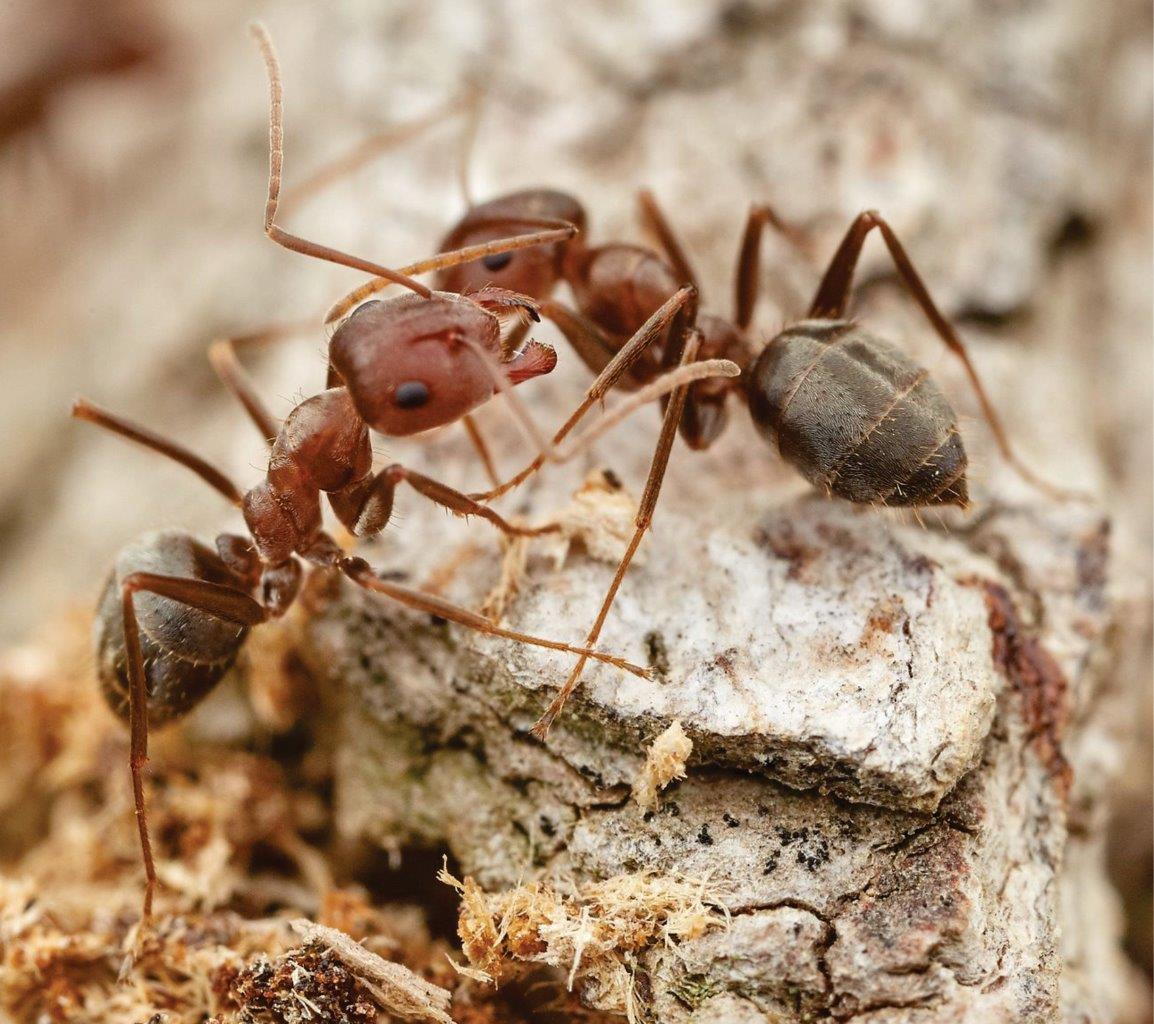
Anoplolepis
“Pugnacious ants”, very active little reddish brown ants in multiple sizes that run around on hot sand looking for toes to bite; they are of major importance in fynbos as vital dispersers of the seeds of over a thousand species, including some of our most charismatic Proteaceae.
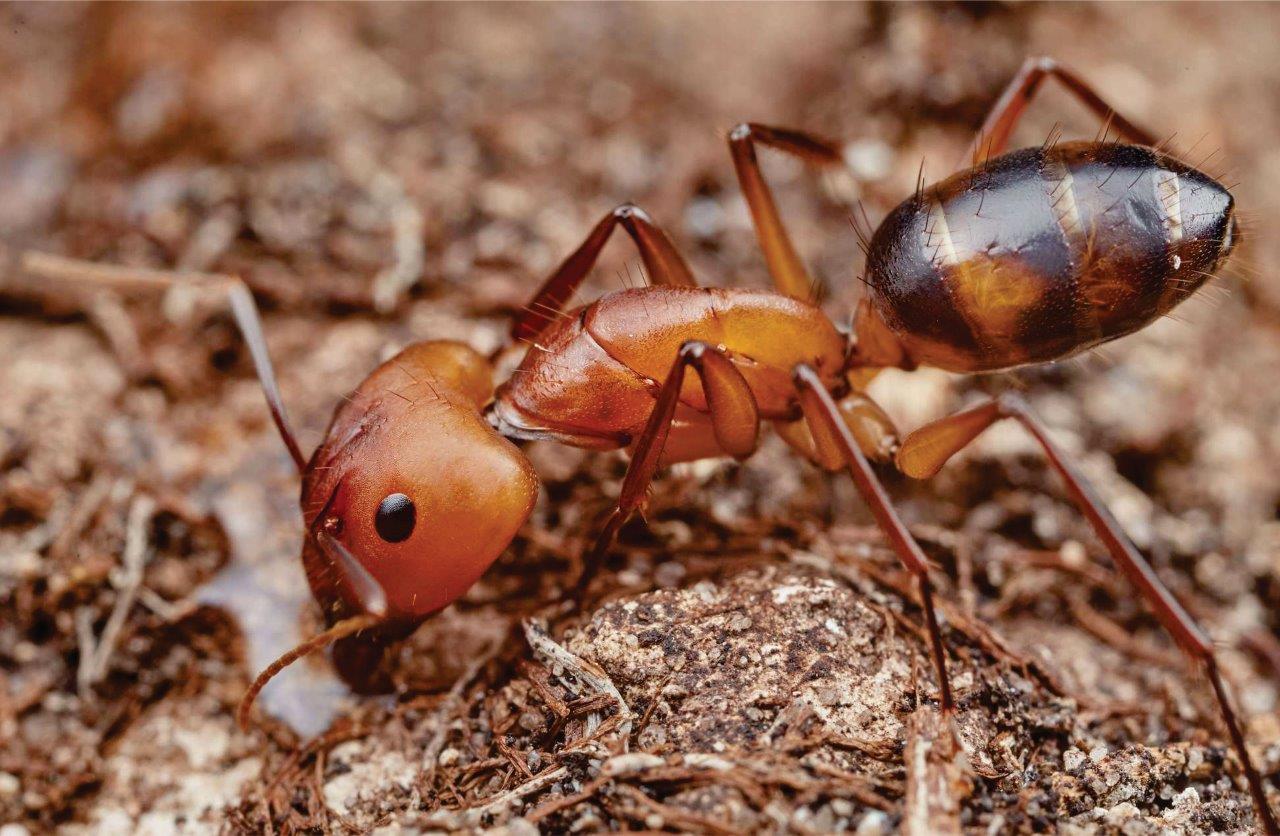
Camponotus
“Sugar ants”, medium to very large ants [majors up to 20mm]. The “hairy sugar ant”, all-black with white gastral [= abdominal] bristles, is probably Betty’s Bay’s most common species. The very large, nocturnal, yellow-red-brown “spotted sugar ant” is a close second.

Crematogaster
“Cocktail ants” are so-called from their habit of raising their gasters aggressively when disturbed. Easily identified, they are the black ants that build large carton-like nests in bushes, and that swarm out when you disturb them, biting everything in sight.
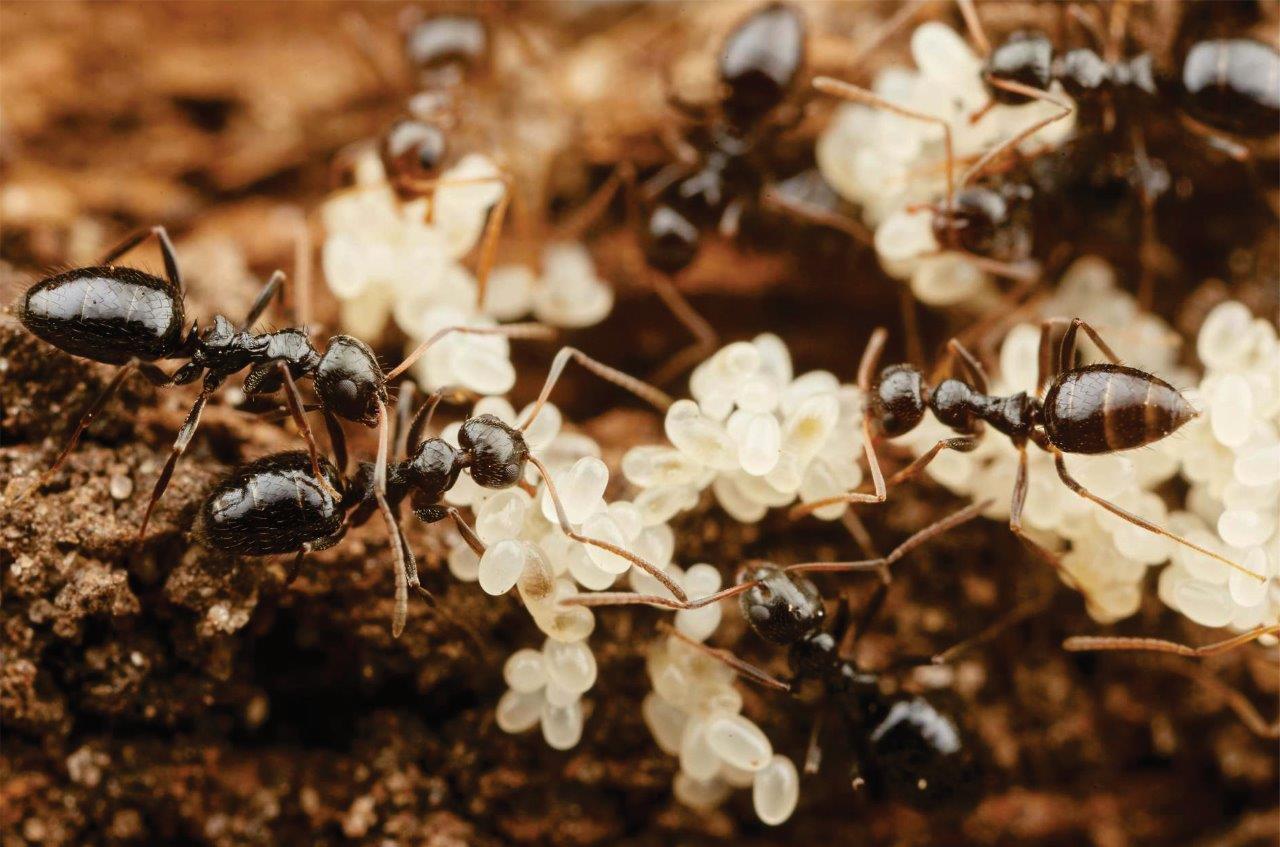
Lepisiota
“Small sugar ants”, small [>3mm], very black and very shiny. In the veld they live in small colonies but they have learned to invade homes, where their colonies can become quite large and they can be seen running in trails through your kitchen.
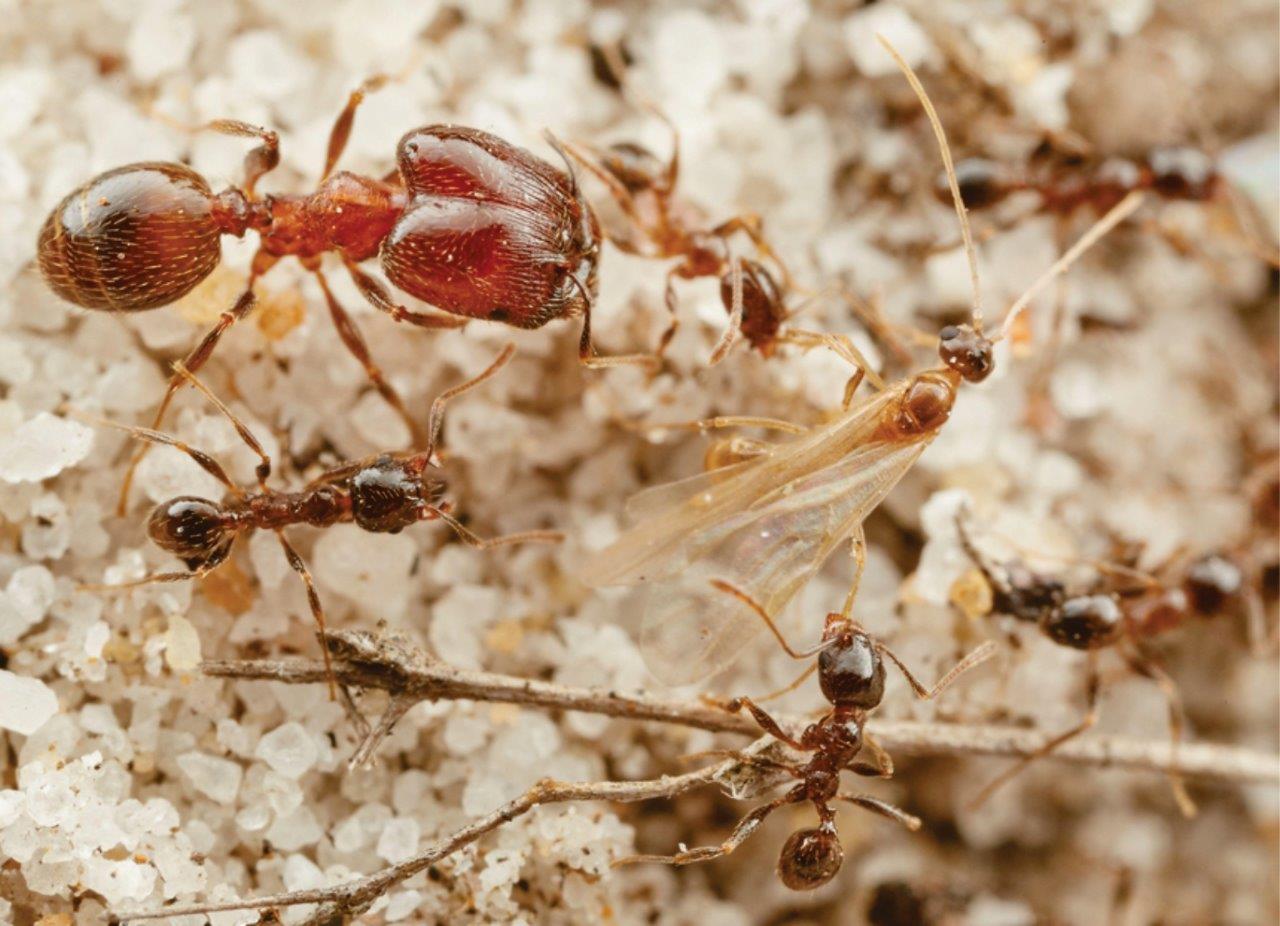
Pheidole
“House ants”, small [>2.5mm] yellowish brown ants with a curious major caste of much larger ants [4mm] with big, square, block-like heads. Can become household pests but also play a huge role in fynbos seed dispersal. The African big-headed ant, Pheidole megacephala, is one that we have bequeathed to the planet as a major worldwide invader.
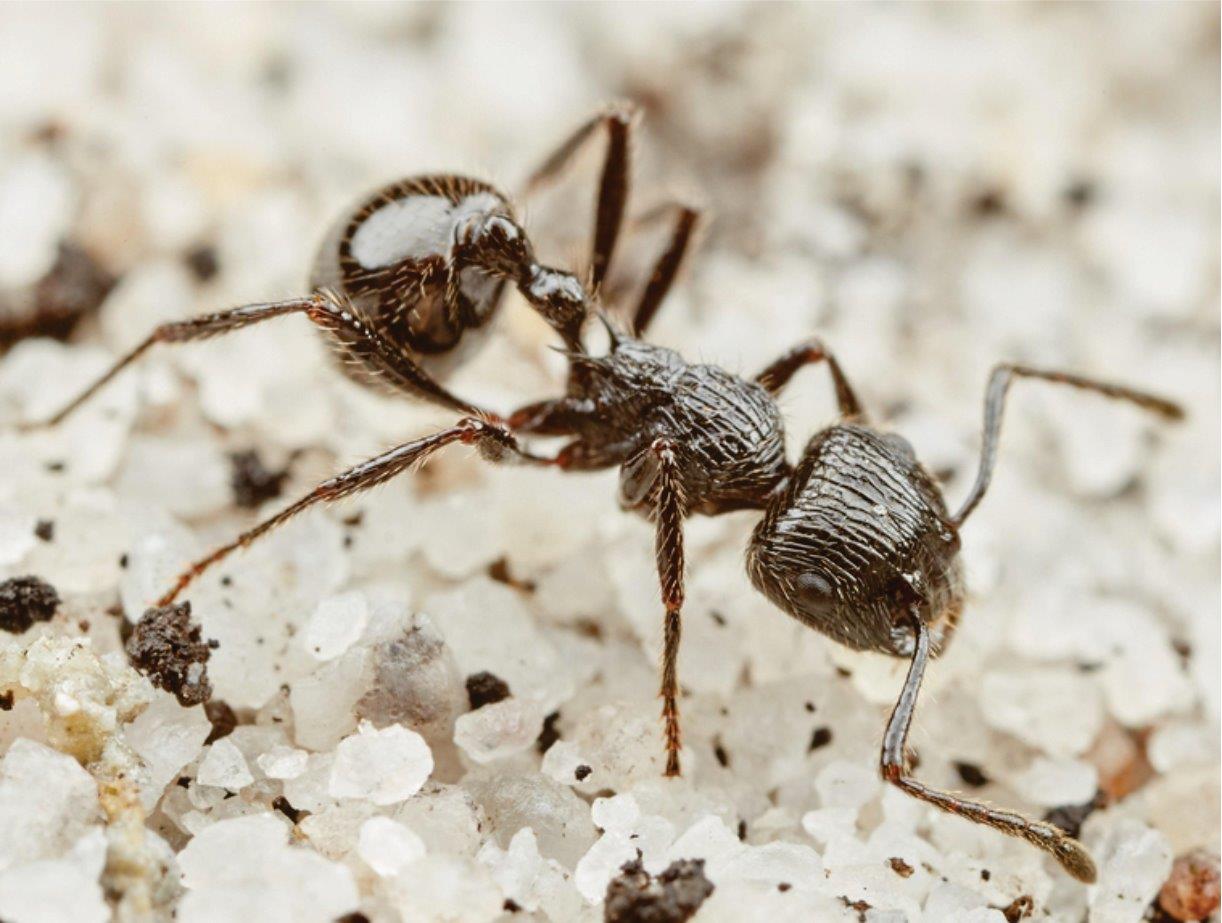
Myrmicaria
“Droptail ants”, medium [5mm] black ants with large drooping gasters that bumble around at a medium pace but can get quite aggro if you disturb them There is only one species in the Western Cape, Myrmicaria nigra.
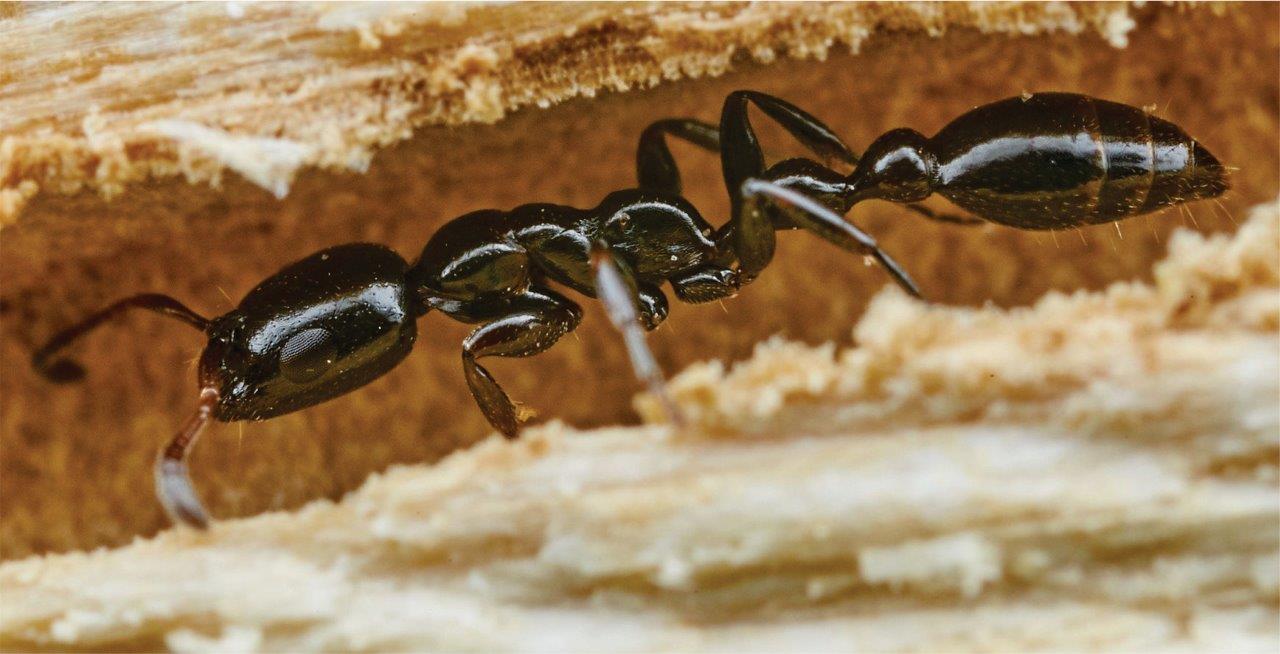
Tetraponera
“Slender ants”, very thin, elongated ants about 5mm long, black or yellow, that nest in the stems of Watsonias, etc
Finally, the world-wide invasive Argentine ant, Linepithema humile, occurs sporadically in Pringle Bay and is a serious threat to fynbos survival, in that they eradicate the indigenous seed-dispersing ants upon which so many plants depend. They are always brown, all the same size [>3 mm], and are the only ants that will swarm out of their nests carrying their brood when you water your garden. They often nest under paving stones where pouring boiling water into their holes is a humane and environmentally safe method of getting rid of them.
